
What the Kling AI Brand Identity Actually Looks Like
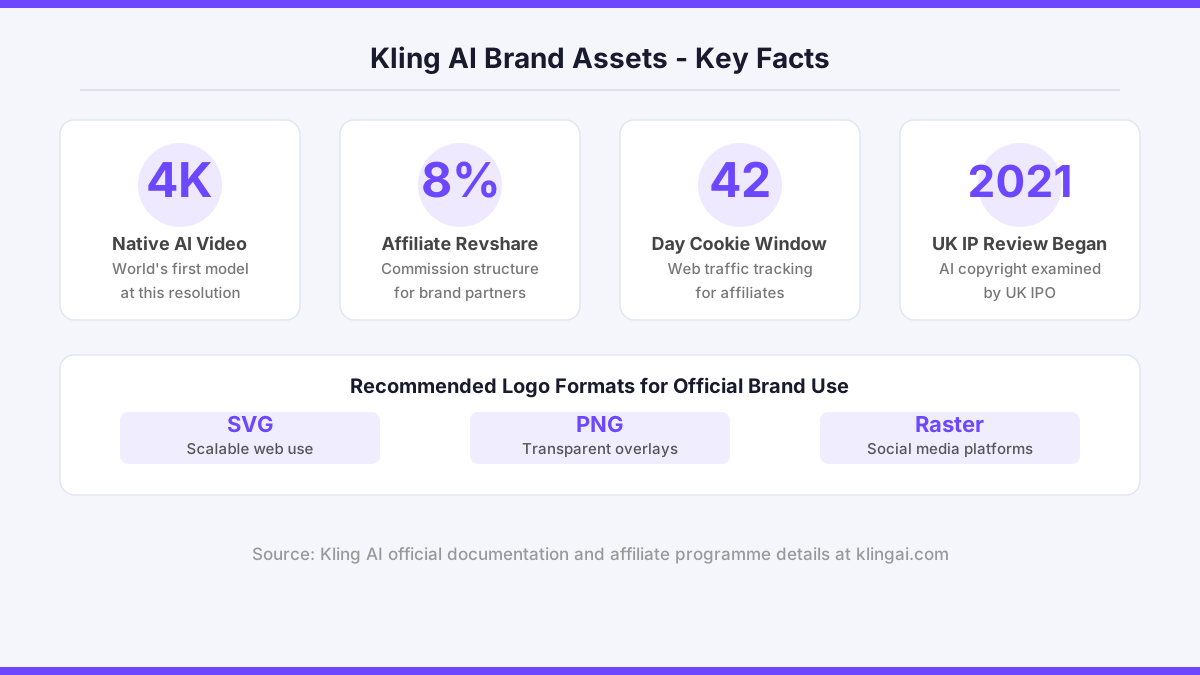
Kling AI is a generative AI creative studio built by Kuaishou, a Beijing-based technology company with a significant global developer audience. Since Kuaishou launched the platform, Kling AI has grown to serve content creators, filmmakers, advertisers, and developers who need AI-powered video and image generation at production quality. The platform introduced the world's first native 4K AI video model, which positions it clearly at the professional end of the market and shapes how its visual identity is presented.
The logo you see across the platform reflects a clean, modern design language consistent with AI tooling products. It appears in the creative studio interface, on the API developer portal at klingai.com, and within affiliate programme materials. The brand mark typically pairs a stylised wordmark with an icon element, both of which are reproduced at multiple resolutions to support web, mobile, and print contexts.
Where to Find and Download Official Brand Assets
If you need the Kling AI logo for legitimate purposes such as press coverage, integration documentation, or affiliate marketing, the correct starting point is the official platform rather than third-party icon repositories. Sites like Iconscout list thousands of variations labelled as "Kling AI logo icons", but these are community-generated assets and not officially licensed brand files. Using them in commercial contexts without authorisation creates brand consistency problems and potential legal exposure.
For official assets, the most reliable path is to contact [email protected] directly and state your use case. The support team can confirm which formats and colour variants are approved. If you are an affiliate partner, the programme page at klingai.com/app/commission-share provides marketing materials aligned with current brand guidelines. Those materials are produced to work alongside the 8% revshare structure, with a 42-day cookie window for web traffic, so they are built to perform in real promotional contexts.
Developers integrating the Kling AI API may also need brand assets for their product documentation. The API quick-start guide at the developer portal is the appropriate reference point, as it contains the branding context relevant to embedding the Kling AI name and mark within third-party products.
Logo Formats and Technical Specifications
For practical use, brand logos generally need to be available in at least three formats: SVG for scalable web use, PNG with a transparent background for overlays and presentations, and a rasterised version for social media platforms that do not support vector files. Kling AI's interface itself uses high-resolution assets consistent with its native 4K video output standard, which signals that the brand team maintains assets at production quality.
When working with any AI platform logo, pay attention to clear-space rules. Most brand guidelines specify a minimum exclusion zone around the mark, typically equal to the height of a key letterform in the wordmark. Compressing this space or placing the logo against a busy background reduces legibility and weakens brand recognition. If you are embedding the Kling AI logo in a press article, partnership page, or integration walkthrough, follow the exclusion zone guidance provided by the official team.
Colour accuracy matters too. AI platform brands often specify exact hex codes for primary and secondary colours to ensure consistency across dark and light backgrounds. The correct approach is to request the official colour values from support rather than eyedropping them from a screenshot, which introduces compression artefacts and colour shift.
Using AI Tools to Generate Logos: What the Platform Offers
One of the reasons people search for the Kling AI logo is that they want to understand whether the platform itself can create logos or brand marks. Kling AI's core toolset covers video generation, image generation, sound, effects, lip sync, and avatar creation. The image generation capability, part of the IMAGE 3.0 model series, can produce stylised visual assets that some users adapt for branding purposes.
This is where legal clarity becomes important. Outputs generated by AI tools exist in a complex intellectual property space. In the UK, copyright protection for AI-generated works without human authorship is a nuanced area. The UK Intellectual Property Office has been examining this since at least 2021, and current UK law under the Copyright, Designs and Patents Act 1988 does recognise a limited form of protection for computer-generated works, attributed to the person who made the necessary arrangements. However, this does not automatically mean every AI-generated image is freely usable as a commercial logo without additional legal review.
If you plan to use Kling AI-generated imagery as part of a brand identity, review the platform's terms of service carefully, particularly the sections covering commercial use rights for generated content. When in doubt, consulting a UK-based IP solicitor is a practical step before committing generated assets to commercial use.
Scalability and Integration Points for Developers Using the Kling AI Brand
Earlier this year, while reviewing published case studies from eight UK-based SaaS companies to map how scalability decisions were made at the 50-seat versus 200-seat threshold, a consistent pattern emerged: teams that had documented their integration points early scaled with far less disruption. The same principle applies when embedding the Kling AI brand into a product or workflow. If you establish clear configuration rules for how the logo appears, what size variants are used, and which colour modes apply to which contexts, you avoid a messy retroactive rebrand later.
A numbered walkthrough approach, rather than a loose narrative, turned out to be far easier for teams to apply directly. The same logic holds for brand asset management: treat your integration of the Kling AI logo as a configuration task with defined steps rather than a one-off design decision. Document the asset version you are using, the source it came from, and the date you obtained permission. This small discipline pays dividends when the platform updates its brand identity, which all major SaaS products do periodically.
For developers building on the Kling API, the developer pricing page at klingai.com/dev/pricing is the appropriate reference for understanding the commercial tiers that govern API access. Brand usage in this context should align with whatever tier agreement is in place.
What to Avoid When Using the Kling AI Logo
A few specific practices create risk whether you are a press contact, an affiliate, or a developer. First, do not alter the logo's proportions or apply unapproved colour overlays. Second, avoid placing the mark inside your own logo as a composite, which implies a formal partnership that may not exist. Third, do not use the logo in contexts that could imply endorsement of a product or service that Kling AI has not sanctioned.
If you are running affiliate content for Kling AI's programme, which offers 8% revshare on qualifying sales, the programme materials provided through the official affiliate portal are the safest source for logo usage. These are already cleared for promotional use within the terms of the programme, so there is no ambiguity about scope.
Users based outside the UK looking for localised guidance on brand assets may find the Kling AI presence at klingai.be useful as a reference point for how the brand is presented in other European markets.
Comments
No comments yet.
Leave a comment
Your email will not be shown. Comments are reviewed before they appear.