


What You Are Actually Paying For
Before comparing numbers, it helps to understand what sits behind the pricing. Kling AI is a generative creative studio developed by Kuaishou, a Beijing-based technology company. The platform generates video, images, sound, and effects using its Kling 3.0 model series, which includes the world's first native 4K AI video model. That distinction matters for UK creators working on broadcast, advertising, or high-resolution branded content, because most competing tools still upscale rather than generate at true 4K.
The pricing model is credits-based inside a subscription structure. You pay for a plan tier, receive a monthly credits allocation, and spend those credits on generations. Heavier tasks, such as longer videos or higher-resolution outputs, consume more credits per generation than lighter ones like short clips or still images. Understanding that rhythm before you choose a plan saves you from the common trap of upgrading for features you do not actually use at the frequency you imagined.
The Free Plan: Is Kling AI Really Free?
Yes, Kling AI does offer a free tier. New users can sign up on the Kling AI website without a payment method and access a limited credits allocation each month. The free plan is genuinely useful for exploration. You can generate short video clips, experiment with image generation, and get a realistic sense of output quality before committing any budget.
The meaningful constraint on the free tier is capacity. Credits reset monthly, but the allocation is modest. If you plan to produce more than a handful of clips, you will hit that ceiling quickly. Think of the free plan as a structured evaluation period rather than a sustainable production tool. It answers the question of whether the platform fits your workflow. After that, the decision becomes which paid tier matches your actual output volume.
Paid Plan Structure: What Each Tier Delivers
Kling AI structures its subscription plans across several tiers, roughly analogous to Basic, Standard, Pro, and higher-capacity options. Pricing is denominated in USD, which means UK creators pay the GBP equivalent at the prevailing exchange rate. At the time of writing in September 2026, that currency layer adds a small but real variable to your monthly cost that is worth factoring into any annual budget.
The Standard plan suits individual creators producing consistent but not daily output. You receive a credits allocation that covers a reasonable number of video generations per month, along with access to core tools including camera control, motion brush, and lip sync. The Pro plan increases that allocation substantially and unlocks priority queue access, which shortens the wait time per generation during peak periods. For developers or agencies running the API at volume, separate API pricing applies at a per-unit rate tied to model and resolution.
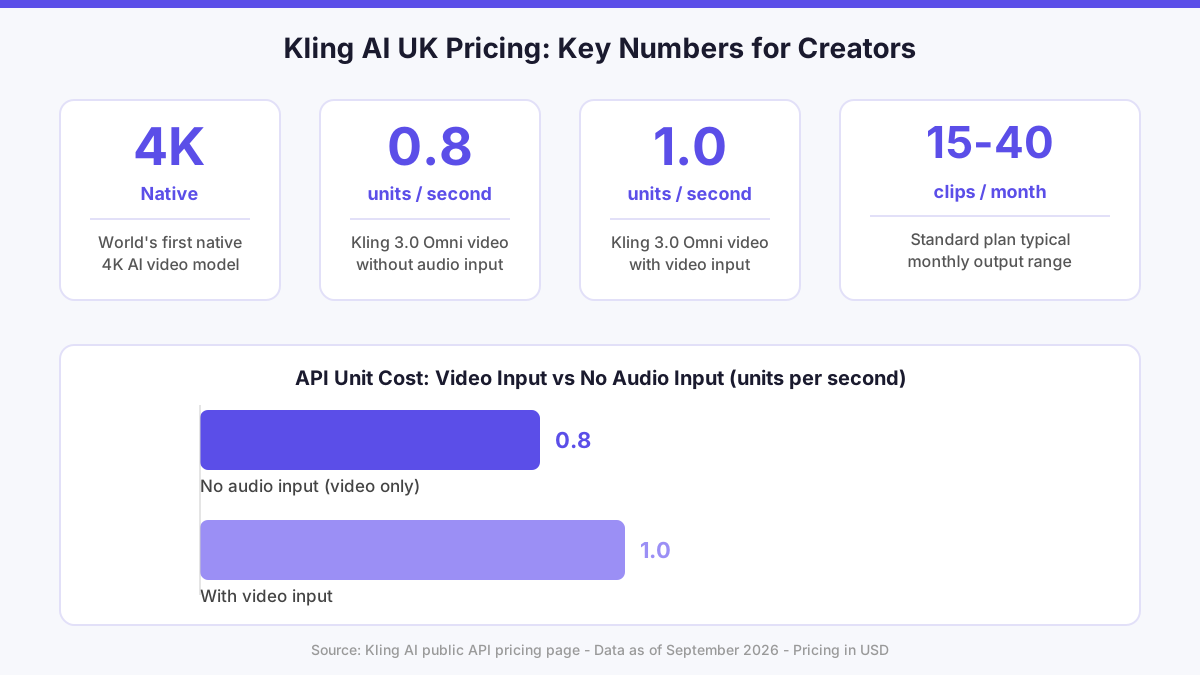
One concrete data point from the public API pricing page: Kling 3.0 Omni generations are priced at 0.8 units per second for video without native audio input, and 1.0 unit per second with video input. Those unit costs translate to USD fractions per generation, but at high volume they accumulate. Any agency embedding Kling AI into a client workflow should model that usage carefully before committing to an API tier rather than a flat subscription.
The Real Cost Question: Credits Per Video
The question most UK creators ask is how many videos a given plan actually produces. That depends on three variables: video length, resolution, and model version. A five-second clip at standard resolution from an older model costs fewer credits than a ten-second clip at 4K using Kling 3.0. The platform publishes a credits table, but the practical answer is that most standard-plan subscribers generate between fifteen and forty video clips per month before exhausting their allocation, depending on those variables.
That range is meaningful. If your workflow involves one or two polished hero videos per week, a standard plan is likely sufficient. If you are producing daily social content or testing multiple iterations of the same scene, you will need more credits than the standard tier provides. Mapping your actual output goals before selecting a plan is the single most important step in getting alignment between what you pay and what you produce.
A Coaching Perspective on Choosing the Right Tier
Earlier this year, I worked with a content lead based in Glasgow during a SaaS tool audit. She was running six separate subscriptions simultaneously. Collectively, those tools were producing less than two intentional, well-chosen platforms could have delivered. Her AI video workflow had no sustainable rhythm; she was generating clips sporadically across different tools without a clear sense of which one to invest in properly.
When Kling AI came up in our research, the conversation shifted. Rather than evaluating features in isolation, we mapped her actual monthly output targets: how many videos, at what length, for which channels. That exercise revealed she needed roughly twenty clips per month, mostly under ten seconds, for social and presentation use. A single mid-tier plan with meaningful capacity covered that entirely. The cost dropped, the workflow simplified, and the output quality improved because she stopped context-switching between tools. Are you making the same kind of intentional assessment before you commit to a subscription?
What Could Be Better: Honest Limitations
No pricing review is useful without naming real constraints. Two stand out for UK creators specifically.
First, the currency situation. Kling AI prices in USD. There is no GBP billing option at the standard subscription level. For sole traders or small studios managing tight budgets, monthly exchange rate variance adds friction. Over a twelve-month period, a creator paying the USD equivalent of roughly $30 per month could see their GBP cost shift by five to eight percent depending on rate movements. That is not a dealbreaker, but it requires ownership of your budgeting process rather than passive subscription management.
Second, the credits system penalises experimentation at higher tiers. When you are generating 4K video using the Kling 3.0 model, credits deplete at a noticeably faster rate than standard-resolution outputs. Creators who want to explore the platform's full capability, particularly the native 4K output that distinguishes it from competitors like Runway or Pika Labs, may find that their allocation does not stretch as far as they expected when they signed up based on standard-resolution examples. That gap between marketing expectation and real-world credits consumption is the most consistent operational tension in the platform's pricing structure.
Kling AI vs Competitors: Where the Cost Lands
Runway and Pika Labs both operate on similar subscription and credits models. Runway's standard plan is broadly comparable in price to Kling AI's equivalent tier. OpenAI's Sora, positioned as a premium offering, sits at a higher price point for equivalent output duration. Stable Video Diffusion is available via open-source routes, which lowers direct cost but transfers the infrastructure overhead to the user.
The distinguishing factor for Kling AI is native 4K output and the breadth of its creative studio. If your workflow requires video, image generation, sound, and effects from a single platform, the consolidated cost is lower than subscribing to four separate tools. That consolidation argument is particularly strong for small production teams or freelancers who are currently managing multiple subscriptions without a coherent strategy. For Belgian creators exploring the same question, the operator also runs a resource at klingai.be that covers platform access in that market.
Is Kling AI Worth It for UK Creators?
The answer depends on your output volume and your current tool stack. For a creator generating fewer than ten clips per month, the free tier or a basic paid plan covers the need at minimal cost. For a studio producing regular branded video, the Pro plan delivers meaningful capacity with priority processing that keeps production schedules on track. The affiliate program, which offers 8% revenue share on sales with a 42-day cookie window for web referrals, also provides a secondary income route for creators with an audience in the AI tools space.
What Kling AI does not do is replace strategic clarity. A subscription to a capable platform does not automatically produce better content. The teams that extract the most value are those who have already defined their output targets, mapped their workflow, and chosen a plan that aligns with real production needs rather than aspirational ones.
Comments
No comments yet.
Leave a comment
Your email will not be shown. Comments are reviewed before they appear.