


Why the Jump From 2.0 to 3.0 Matters for Creators
Generative AI video tools have moved fast since 2023, but the release of the Kling 3.0 model series from Kuaishou represents a structural shift rather than a version bump. Where Kling 2.0 delivered solid text-to-video and image generation, the 3.0 architecture rebuilds the foundation entirely. Native 4K output is no longer post-processed or upscaled; it is generated at source resolution. That distinction matters practically when you are producing content for broadcast, advertising, or any deliverable where quality at full size is non-negotiable.
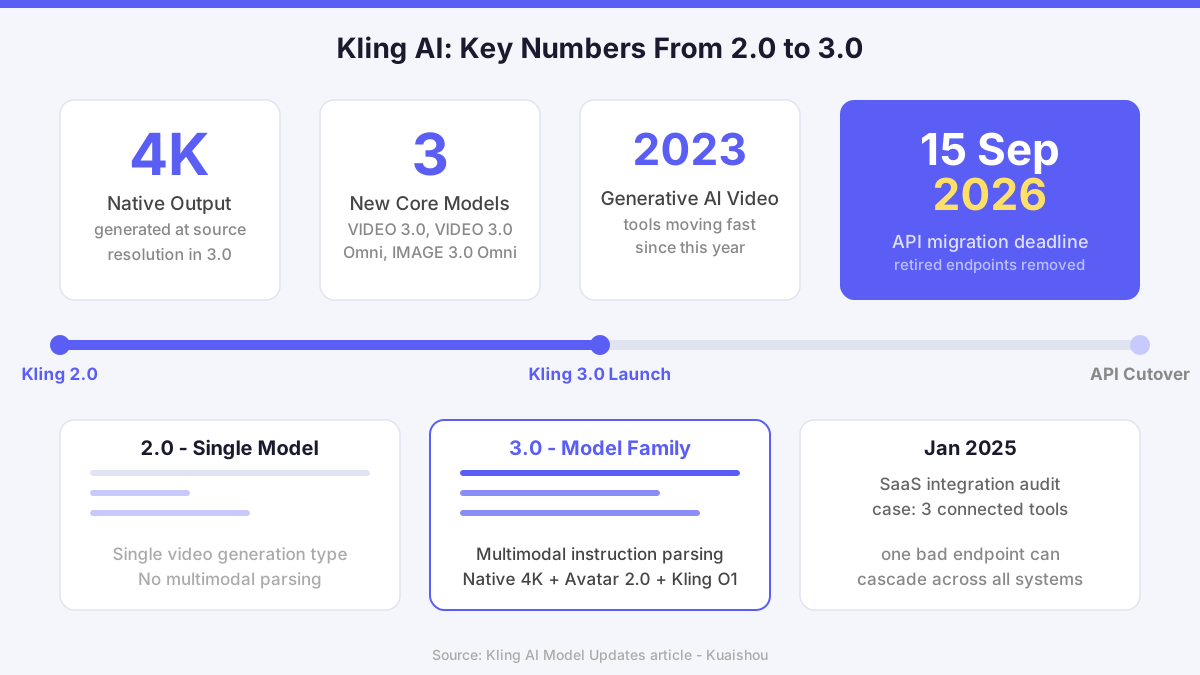
The platform now serves content creators, filmmakers, and advertisers who need professional-grade assets without a dedicated rendering pipeline. Developers working through the Kling AI API also face a concrete timeline: Kuaishou has confirmed that retired API endpoints and templates will no longer be available after 15 September 2026, making migration planning a priority for any team still running 2.0-era integrations.
The Architecture Change: What Is Actually Different Under the Hood
Kling 2.0 operated on a single model type for video generation. Kling 3.0 introduces a structured model family with distinct roles. VIDEO 3.0 handles standard high-quality video generation. VIDEO 3.0 Omni adds multimodal instruction parsing, meaning the model interprets combined text, image, and structural prompt inputs rather than treating each input type separately. This is the key technical advancement that separates the two generations.
Multimodal parsing in practice means the model builds narrative logic across a sequence rather than treating each frame or clip as an isolated output. For a filmmaker working on a short piece, this translates to more consistent character positioning, lighting continuity, and motion coherence across cuts. These were common pain points with 2.0-era outputs, where extended sequences could drift visually even with careful prompting.
IMAGE 3.0 Omni follows the same multimodal design principle but applies it to still frames. Kuaishou describes this as a cinematic narrative experience through still imagery, which is a genuine functional addition rather than a marketing label. A single high-quality still can now carry compositional intent that the model understands as part of a larger visual story. For a full breakdown of what each feature set unlocks, the features overview is worth reading alongside this update summary.
Kling O1 and Avatar 2.0: The Supporting Models
Beyond the core VIDEO 3.0 and IMAGE 3.0 families, Kling 3.0 ships with two additional models that address specific production needs. Kling O1 is positioned for higher-reasoning generation tasks, where the output requires more deliberate compositional logic rather than speed-optimised generation. Avatar 2.0 handles lip sync and avatar creation, replacing the earlier avatar tooling with improved synchronisation and more natural motion in facial animation.
Camera control and motion brush tools carry over from earlier versions but are updated to work within the new architecture. These tools give creators frame-level control over camera movement and object motion without requiring separate post-production software. The integration point here is significant: by keeping camera control inside the same generation environment, the platform removes a step that previously required exporting to a third-party editor.
API Migration: What Developers Need to Do Before September 2026
For developers building on the Kling AI API, the 3.0 transition is not optional. The API documentation states clearly that model migration and workflow adjustments must be complete by 15 September 2026. After that date, retired APIs and templates are removed from the service without a further grace period.
This kind of hard cutover is worth taking seriously. Working with multi-tool API configurations in January 2025, I spent most of a Tuesday afternoon mapping how three connected SaaS integrations interacted at their configuration layer. What became clear through that exercise - including deliberately replicating one misconfiguration twice to confirm the behaviour - is that a single outdated endpoint in one system can cascade data inconsistencies into every downstream tool that depends on it. The lesson for GB operations managers handling Kling AI alongside other SaaS platforms is to audit your integration points before the September deadline rather than after. Checking the policy changes page will also confirm whether any additional terms apply to your account type.
The official API documentation provides the specific endpoint references and migration path. If your workflow uses Zapier, Make, or a custom integration layer, test against the 3.0 endpoints in a sandbox environment well before the cutover date.
Kling 3.0 vs Kling 2.0: A Structured Comparison
The practical differences between the two generations are easiest to understand by output category. Video resolution is the headline change: 2.0 delivered high-quality video but without native 4K generation. Kling 3.0 VIDEO and VIDEO 3.0 Omni produce 4K natively, which affects rendering time and credit consumption but eliminates the quality loss associated with upscaling workflows.
Instruction handling is the second major area. Kling 2.0 processed text prompts and image prompts effectively but treated them as separate inputs. The Omni models in 3.0 parse multimodal instructions as a unified input, which produces more coherent outputs when your prompt combines a reference image with a descriptive text instruction and a motion parameter. For a detailed look at how to leverage this in a video generation workflow, the guide on generating 4K video walks through the practical steps.
Sound generation is part of the platform toolset in both generations, but the 3.0 series integrates audio generation more tightly with video output timing, which reduces manual synchronisation work. Effects generation also benefits from the updated architecture, with more consistent application across longer clip durations.
For those evaluating Kling AI against competitors such as Runway or Pika Labs, the native 4K capability is currently a differentiating factor in the AI video generation space. OpenAI Sora has attracted significant attention, but as of mid-2026, Kling 3.0 remains one of the few platforms offering industrial-grade 4K output as a standard feature rather than a premium add-on. For a broader comparison of how the platform stacks up overall, the full platform review covers the competitive landscape in detail.
Where the Platform Still Has Room to Improve
Kling AI's regulatory status outside China remains unclear in key markets including the US, EU, and GB. For UK-based businesses handling content that includes personal data or identifiable individuals, the absence of published GDPR compliance documentation or a Data Processing Addendum is a concrete gap. Until Kuaishou publishes clear data handling terms for EU and UK users, professional and enterprise customers should review their own data obligations before using the platform for commercially sensitive content.
The affiliate program offers 8% revenue share with a 42-day cookie lifetime for web referrals, which is a reasonable structure, but payment methods accepted through the platform are not publicly detailed in the current documentation. For teams that need to integrate Kling AI spend into formal procurement workflows, this can complicate internal approval processes. Both of these are solvable with clearer documentation rather than fundamental product changes, but they are worth naming rather than glossing over.
Comments
No comments yet.
Leave a comment
Your email will not be shown. Comments are reviewed before they appear.